


What Are Alloys of Car Body Aluminum Sheets
EN AW 5754 automotive sheet belongs to the aluminum-magnesium alloy family, a rust-resistant aluminum alloy. It uses aluminum as the base material, with the addition of 2.6%-3.6% magnesium and 0.5%-0.8% manganese, retaining the lightweight properties of aluminum while enhancing strength and corrosion resistance through alloying. Its density is only 2.66 g/cm³, perfectly meeting the requirements for lightweight vehicle bodies.
From a mechanical property perspective, 5754 aluminum sheet exhibits stable performance in different states: in the annealed state (O temper), the tensile strength reaches 180-240 MPa, while in the semi-hard state (H32 temper), the tensile strength increases to 230-280 MPa, with elongation maintained between 6%-20%. This combination of moderate strength and good plasticity allows it to be adapted to various processing techniques.
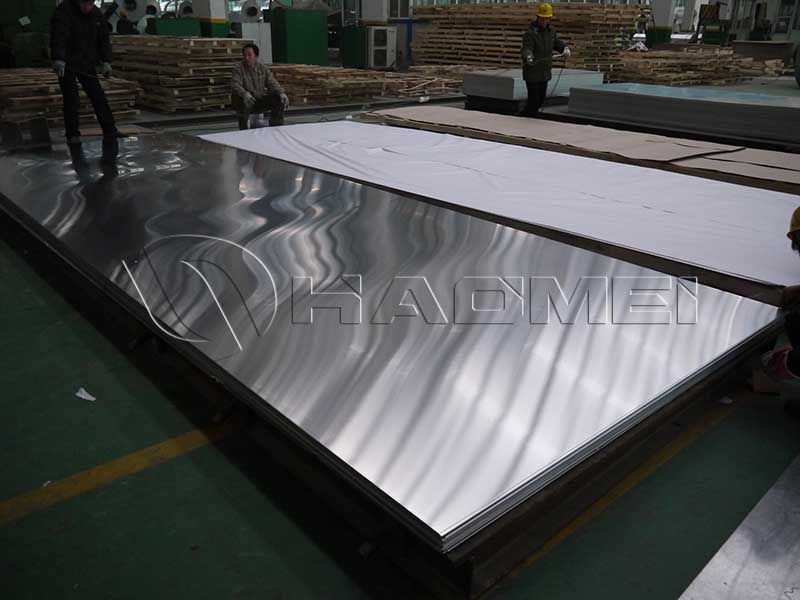
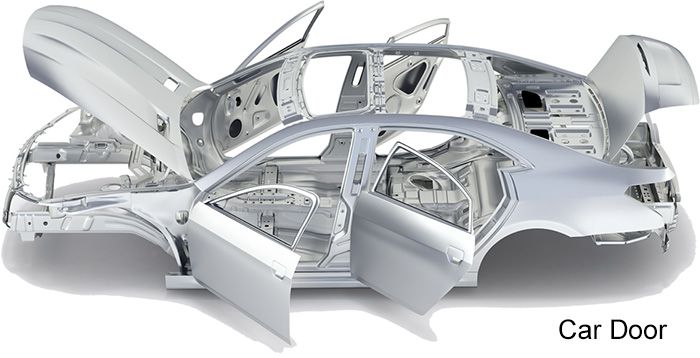
In automotive applications, the advantages of 5754 aluminum alloy are fully utilized. Due to its excellent stamping formability and weldability, it has become a core material for car doors, molds, and seals.
As a frequently opened and closed component of the car body, the door requires both sufficient strength to withstand collisions and good formability to accommodate complex shapes. 5754 aluminum alloy perfectly meets this requirement. Its characteristics of crack-free stamping and high-strength welded joints allow for efficient and safe door manufacturing.
Furthermore, thanks to its superior corrosion resistance (a dense oxide film forms on its surface, resisting corrosion from fresh water, atmosphere, and weak acids and alkalis), 5754 aluminum alloy can also be used in underbody protection components to cope with the complex conditions of daily driving, such as wet conditions and gravel impacts.
It is worth mentioning that 5754 aluminum alloy achieves a precise balance in performance: compared to the high-strength 5083 aluminum alloy, it is easier to process and more suitable for mass production; compared to the slightly less corrosion-resistant 6-series alloys, it has a longer service life in harsh environments. Therefore, it is widely used in mid-range passenger car body components, becoming a preferred material that balances cost, performance, and safety.
Other Mainstream Alloys
5000 Series Alloys
5-series aluminum alloys use aluminum and magnesium as core alloying elements, possessing good corrosion resistance and formability. Besides 5754, 5052, 5182, and 5083 are also commonly used in automotive applications. Among them, 5182 aluminum alloy has extremely excellent stamping performance and high elongation, making it an ideal material for body panels. It is widely used in hoods, fenders, and other parts, easily achieving complex curved surfaces, and is less prone to cracking after stamping.
5052 aluminum alloy focuses on a balance between lightweight and corrosion resistance, commonly used in automotive fuel tanks and chassis protection components, meeting the high requirements of new energy vehicles for fuel/battery system protection. 5083 aluminum alloy has higher strength and outstanding corrosion resistance, and is mostly used in body structural components (such as underbody protection plates and air tanks) and new energy battery trays, handling high-strength stress scenarios.
6-Series Aluminum Alloys
6-series aluminum alloys (aluminum-magnesium-silicon based) are strengthened through heat treatment, possessing high strength and good machinability, making them a core choice for body structural components. Among them, 6061 car body aluminum sheet has a tensile strength of up to 345MPa (T6 temper) and is commonly used in wheel hubs, new energy vehicle battery base plates, and vehicle body frames, ensuring body rigidity while reducing weight.
6082 aluminum alloy has even higher strength and excellent weldability, making it suitable for truck chassis and commercial vehicle structural components to meet the strength requirements under heavy-duty conditions. In addition, the independently developed 6B05 alloy also possesses excellent pedestrian protection performance and is commonly used in hoods and door inner panels, balancing safety and environmental economy.
3-Series Aluminum Alloys
3-series aluminum alloys (aluminum-manganese series), represented by 3003, possess good thermal conductivity and corrosion resistance, and are relatively affordable. They are mainly used in the casing materials and radiator components of new energy vehicle power batteries. Their thickness can be controlled between 0.20-4.5mm, meeting the requirements for lightweight and high protection of battery casings. At the same time, their excellent thermal conductivity helps dissipate battery heat, ensuring the range and safety of new energy vehicles.
The Core Value of Aluminum Alloy Body Applications
Today, the proportion of aluminum alloys used in car bodies continues to increase. The NIO ES8 uses 96.4% aluminum alloy materials, and the new Audi A8 uses 58%, demonstrating its widespread industry acceptance.
The application of these alloy materials not only achieves weight reduction but also creates value in safety and environmental protection: aluminum has excellent energy absorption properties, effectively absorbing impact forces during collisions and improving occupant safety; the surface oxide film extends the life of the car body, reducing later maintenance costs; at the same time, the aluminum recycling rate is as high as 95%, and the energy consumption of recycling is only 5% of that of virgin aluminum, aligning with the green manufacturing trend under the "dual carbon" goal.
Original Source:https://www.autoaluminumsheet.com/a/what-are-alloys-of-car-body-aluminum-sheets.html
Tags: 5754 aluminum sheet ,
Prev:5052 Aluminum Sheet for Cars
Next:6016 T6 Aluminum
Related Product
Related Blog
Related Application
Contact Form
Products
Application

 ©
Haomei Aluminum CO., LTD..
©
Haomei Aluminum CO., LTD..